
Wingo Game on 92 Game: Full Rules, Payouts and Round Types
The Wingo game is the format that made 92 Game popular in Pakistan, and it is far simpler than the busy interface makes it look. One digit from 0 to 9 decides every round, and that single digit carries a colour, a size and its own exact value — three things you can bet on at once. This guide explains every rule, every payout, all four round lengths, and the arithmetic underneath, in plain rupees.
Wingo Game Overview
Wingo appears under different names across platforms, but the mechanics are consistent everywhere the format is used:
- A round opens with a period number and a countdown.
- Players bet on a colour, a size, or an exact number.
- Betting locks in the final seconds.
- A digit from 0 to 9 is drawn.
- Winning bets pay a fixed multiple; the next round opens immediately.
Ten possible results, six bet types, and a payout table that never changes. Everything else in the interface — the charts, the trend strips, the leaderboards — is presentation.
The Number and Colour Map
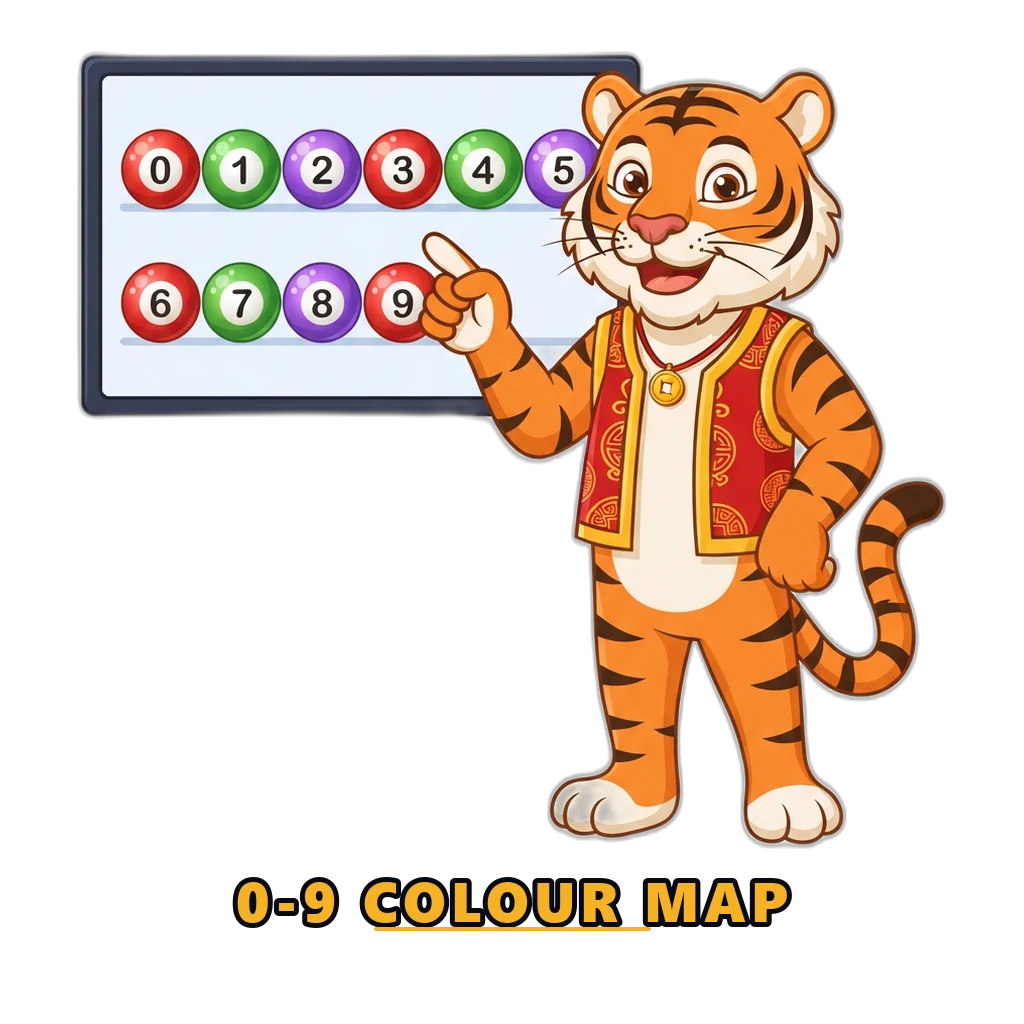
This mapping is the foundation of the whole game and is worth memorising, because every bet type refers back to it.
| Number | Colour | Size | Wins for |
|---|---|---|---|
| 0 | Red + Violet | Small | Red (reduced), Violet, Small, exact 0 |
| 1 | Green | Small | Green, Small, exact 1 |
| 2 | Red | Small | Red, Small, exact 2 |
| 3 | Green | Small | Green, Small, exact 3 |
| 4 | Red | Small | Red, Small, exact 4 |
| 5 | Green + Violet | Big | Green (reduced), Violet, Big, exact 5 |
| 6 | Red | Big | Red, Big, exact 6 |
| 7 | Green | Big | Green, Big, exact 7 |
| 8 | Red | Big | Red, Big, exact 8 |
| 9 | Green | Big | Green, Big, exact 9 |
The two dual-colour results, 0 and 5, are where the game earns much of its margin. They let violet exist as a bet type, and they are the reason a colour bet pays a reduced rate when one of them lands.
Every Bet Type Explained
Colour bets: green and red
Green wins on 1, 3, 7 and 9 at full rate, and on 5 at a reduced rate. Red wins on 2, 4, 6 and 8 at full rate, and on 0 at a reduced rate. Each covers five of the ten results, which is why it feels like a coin flip — and it very nearly is, apart from the reduced payout on the dual result and the edge built into the multiplier.
Violet
Violet wins only on 0 and 5. Two results out of ten, paying about 4.5×. It is marketed as the exciting bet and is one of the more expensive ones. Some players place violet alongside a colour bet believing it hedges the position; it does not. Two bets with negative expectation combine into a larger negative expectation, not into safety.
Big and Small
Big covers 5–9 and Small covers 0–4. Five results each, no dual-result complications, and usually the lowest edge on the board. It is the cleanest bet in the game and the sensible starting point for anyone learning.
Exact number
A bet on one specific digit, paying about 9× and landing one round in ten. High variance, and the arithmetic is discussed below — Rs 100 staked on a single digit across ten rounds means Rs 1,000 risked to win Rs 900 on average.
Full Payout Table
| Bet | Wins on | Results covered | Payout | Return on Rs 1,000 staked |
|---|---|---|---|---|
| Green | 1, 3, 7, 9 · 5 at reduced rate | 5 of 10 | 2× (1.5× on 5) | About Rs 970 |
| Red | 2, 4, 6, 8 · 0 at reduced rate | 5 of 10 | 2× (1.5× on 0) | About Rs 970 |
| Violet | 0, 5 | 2 of 10 | 4.5× | About Rs 900 |
| Big | 5, 6, 7, 8, 9 | 5 of 10 | 2× less commission | About Rs 980 |
| Small | 0, 1, 2, 3, 4 | 5 of 10 | 2× less commission | About Rs 980 |
| Exact number | One digit | 1 of 10 | 9× | About Rs 900 |
Every row on that table returns less than Rs 1,000 for Rs 1,000 staked. There is no exception, and there is no combination of the rows that produces one. That is the game, stated completely.
The Four Round Lengths
Wingo is offered at 1, 3, 5 and 10 minutes. The rules, the colour map and the payouts are identical across all four. Only the clock changes — and the clock decides your hourly cost.
| Round | Rounds per hour | Turnover per hour | Typical expected loss per hour |
|---|---|---|---|
| Wingo 1 Min | 60 | Rs 6,000 | Roughly Rs 120–180 |
| Wingo 3 Min | 20 | Rs 2,000 | Roughly Rs 40–60 |
| Wingo 5 Min | 12 | Rs 1,200 | Roughly Rs 24–36 |
| Wingo 10 Min | 6 | Rs 600 | Roughly Rs 12–18 |
Same odds, same payouts, ten times the cost. Those figures assume the low-edge Big/Small bet; on a colour bet at roughly 5% the same hour costs about Rs 300 rather than Rs 150, which is why the bet type and the round length compound. Choosing the round length is the most consequential decision available to a player, and it is made before any bet is placed. The 1 minute round page looks at that trade-off in more depth.
Reading the Game Screen
The interface is denser than it needs to be. These are the parts that matter.
- Period number. The round identifier. Screenshot it before raising any dispute.
- Countdown. Time until betting locks, not until the result appears.
- Colour buttons. Green, violet and red, with their multipliers shown.
- Number grid. The 0–9 buttons, coloured according to the map above.
- Big / Small buttons. The two size bets.
- Stake chips. Preset amounts. Tapping a market stakes the selected chip.
- Result history. Recent draws. Historical only — see the prediction page for why it predicts nothing.
- Balance. Worth watching more closely than the history strip.
Learn the screen without paying for the lesson
Our free demo uses the same layout, the same bet types and the same multipliers with play money. Work out which button does what before real rupees are involved.
The Maths Behind the Payouts
The arithmetic is simple enough to check yourself, and doing so is more convincing than being told.
The exact-number bet
Ten possible results. You pick one. It lands on average once per ten rounds. Stake Rs 100 each round for ten rounds: Rs 1,000 risked, one win at 9× paying Rs 900. Net expectation: minus Rs 100, or a 10% edge on that bet.
The colour bet
Green covers five results but pays a reduced 1.5× on one of them. Across ten rounds at Rs 100 you win four times at 2× and once at 1.5×: Rs 800 plus Rs 150 is Rs 950 returned on Rs 1,000 staked. That is a 5% edge, and it comes entirely from the dual-colour result.
Big and Small
Five results, no reduced rate, paying just under 2× after commission. This produces the lowest edge on the board, typically around 2%. It is still an edge.
Why combining bets does not help
Covering green and violet together does not create a safe position. Each bet keeps its own negative expectation, and combining two negatives produces a larger negative. Hedging works when one side has positive expectation; here neither does.
A Sensible First Session
If you decide to play, this structure keeps a first session cheap and instructive.
- Use the demo first. At least twenty rounds, at no cost.
- Pick the 5 or 10 minute round. Identical odds, far slower burn.
- Bet Big or Small only. Lowest edge, simplest to follow.
- Keep the stake flat. Never increase after a loss.
- Set a rupee limit and an alarm. Both before the first round, not during.
- Stop at the limit either way. Winning sessions need an exit too.

Variance: Why Short Sessions Mislead
Everything above describes what happens on average. What you experience in one evening can look nothing like the average, and understanding that gap explains most of the confusion around this game.
The average is a long-run figure
A 2% house edge on Big/Small does not mean you lose 2% of every session. It means that across many thousands of rounds, total returns land near 98% of total stakes. Any individual session of thirty or fifty rounds can finish anywhere — well up, well down, or roughly flat — purely through normal variation.
This is why a winning evening proves nothing and a losing one proves nothing either. Both are completely consistent with the same fixed payout table.
What a losing run actually looks like
| Losses in a row | Chance in any given sequence | Roughly how often in 100 rounds |
|---|---|---|
| 3 in a row | 1 in 8 | About 12 times |
| 4 in a row | 1 in 16 | About 6 times |
| 5 in a row | 1 in 32 | About 3 times |
| 6 in a row | 1 in 64 | About 1–2 times |
| 7 in a row | 1 in 128 | Roughly once every 2 sessions |
| 8 in a row | 1 in 256 | Occasionally — it is normal, not remarkable |
Read that table before you meet a losing run rather than during one. Eight consecutive losses feels like something has gone wrong; it is an ordinary event that turns up regularly on a coin-flip bet. Expecting it removes most of its power to change your behaviour.
This is also the table that kills doubling systems. A player using Martingale from a Rs 100 opening stake needs Rs 12,800 on the eighth bet of a losing run — and runs of eight arrive far more often than the arithmetic feels like it should allow.
Why variance makes prediction feel real
Variance is also the engine behind every prediction claim. In a random sequence of a hundred results there will be stretches where one colour dominates, stretches of neat alternation, and stretches where a number repeats. Any method applied during one of those stretches appears to work.
Apply the same method across a thousand rounds and it converges on the payout table, like every other method. The prediction page covers how sellers turn this effect into a business.
The practical takeaway
- Judge a session by whether it was enjoyable, not by whether it was profitable.
- Expect runs of six or more losses. They are routine, not a signal.
- Never treat a winning streak as evidence of skill. It is the same variance in the other direction.
- Keep stakes flat through both. Variance is exactly what breaks escalating systems.

Play Safely and Responsibly
Wingo is designed to be played repeatedly, and every design choice — the short rounds, the instant settlement, the immediate next window — supports that. Being aware of the design is the most useful defence against it.
Set your limit in rupees before you start, choose a slower round, and stop when the limit is reached whether you are up or down. If stopping is difficult, our responsible gaming guide lists free confidential support.
Real-money play carries real financial risk, is strictly for adults aged 18 and over, and may be restricted where you live. No result on any prediction or lottery game can be guaranteed. Read our full responsible gaming guide for budgets, limits and support contacts in Pakistan.
Related 92 Game Guides
- Colour PredictionWingo colour prediction on 92 Game.
- 1 Minute PredictionWingo 1 minute prediction explained.
- Wingo PredictionWingo prediction explained honestly for 92 Game players.
- 92 Game Lottery92 Game Lottery explained in simple words.
- How to PlayHow to play 92 Game step by step.
- Free DemoTry a free 92 Game style Wingo demo in your browser.
- Responsible GamingA practical responsible gaming guide for Pakistan.
- FAQ92 Game FAQ for Pakistan players.
Wingo Game FAQ
What is the Wingo game?
Wingo is a fast colour and number prediction game. Each round produces a single digit from 0 to 9, and players bet on its colour (red, green or violet), its size (Big 5-9 or Small 0-4), or the exact digit. Rounds close every one, three, five or ten minutes depending on the table.
How do numbers map to colours in Wingo?
Odd numbers 1, 3, 7 and 9 are green. Even numbers 2, 4, 6 and 8 are red. Zero is red plus violet and five is green plus violet, which is why violet bets win only on 0 and 5 and why colour bets pay a reduced rate on those two results.
What does Big and Small mean in Wingo?
Big covers the results 5, 6, 7, 8 and 9. Small covers 0, 1, 2, 3 and 4. Each wins on exactly half the possible results and pays about double, making it the simplest bet on the board and the one most beginners start with.
Which Wingo bet has the best odds?
Big and Small usually carry the smallest house edge, followed by the colour bets, with violet and exact-number bets the most expensive. That said, every bet on the board returns less than it risks over time, so "best" here only means least costly, never profitable.
Can I play Wingo for free?
Yes, on this site. Our free demo runs the same round timing, the same bet types and the same payout multipliers using play money and simulated results, with no deposit and nothing at risk.
Wingo Game Summary
Wingo is one digit, three properties and six bet types. Learn the colour map, understand that Big and Small carry the lowest edge, and recognise that every bet on the board returns less than it risks over time.
The one decision that genuinely changes your cost is the round length, and it is made before you bet anything. Practise on the free demo, then read how to play for the full first-session walkthrough.
Everything on this page reduces to one sentence: ten possible results, six ways to bet on them, and a payout table that pays slightly less than the odds justify in every single case. Learn the colour map, choose the slowest table, and treat the rest of the interface as decoration — because that is what it is.
External references
- House edge — how the built-in margin works in any fixed-odds game
- Expected value — the calculation behind every payout figure on this page
- BeGambleAware — budgeting tools and independent advice